Silent Ecological Crisis of the Marusudar River
The Himalayan rivers are among the most valuable freshwater ecosystems, supporting diverse wildlife, maintaining ecological balance and sustaining communities. However, increasing human activities are putting immense pressure on these fragile natural systems. One such example is the Marusudar River in the Kishtwar district of Jammu and Kashmir, where growing environmental pressures are raising concerns about its ecological future.
Flowing through the picturesque landscapes of the Marwah region, the Marusudar River is an important tributary of the Chenab River. Its clear waters, rocky riverbeds, natural gravel deposits and surrounding vegetation create suitable habitats for several aquatic and terrestrial species. Unfortunately, activities such as unregulated sand and gravel extraction, habitat disturbance and infrastructure development are creating serious conservation challenges.
Marusudar River: A Natural Treasure of the Himalayas
The Marusudar River originates from high-altitude Himalayan streams and flows through the remote mountain landscapes before joining the Chenab River. It plays an important role in maintaining freshwater biodiversity and supporting the ecological balance of the region. Its riverbeds provide feeding and breeding habitats for aquatic organisms, while surrounding vegetation offers shelter and food for different wildlife species.
The river is also important for local communities that depend on freshwater resources for their daily needs and livelihoods. Therefore, its degradation could have consequences extending beyond wildlife conservation.
Illegal Riverbed Mining: A Growing Environmental Concern
One of the major threats to the Marusudar River is unregulated extraction of sand, gravel and pebbles. Riverbed materials are not simply construction resources they are essential components of natural river ecosystems. Gravel beds provide spawning grounds for fish, while pebble formations create feeding habitats for specialised river birds.
Excessive extraction can alter the natural river channel, disturb water-flow patterns, increase sediment movement and accelerate riverbank erosion. The operation of heavy machinery can also disturb wildlife and damage sensitive habitats.
If these activities continue without proper environmental assessment and monitoring, the river's ecological stability could gradually deteriorate.
Wildlife Under Threat: Three Important Species at Risk
The ecological importance of the Marusudar River becomes particularly evident through the wildlife species that depend on its natural habitats.
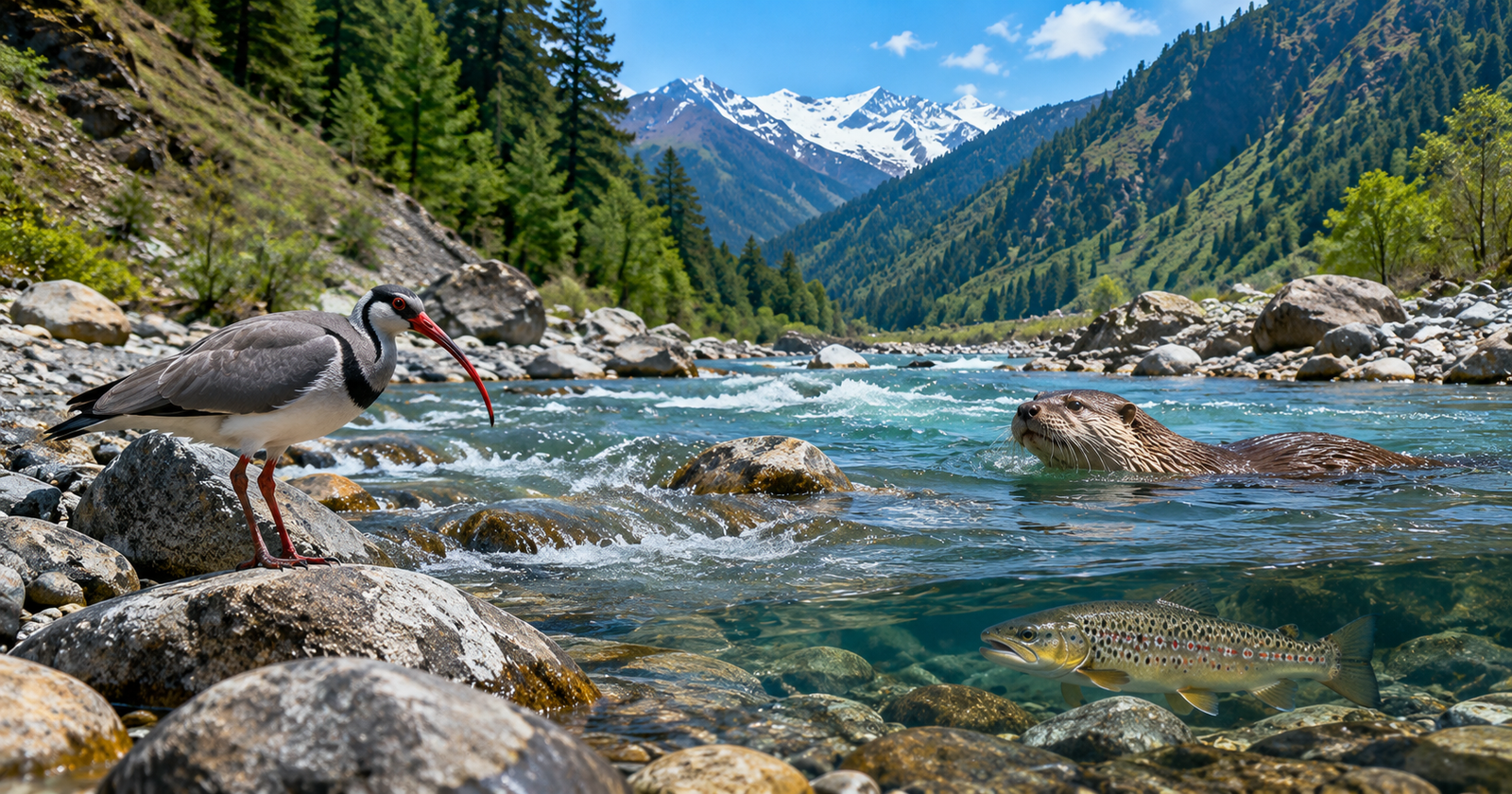
1. Ibisbill (Ibidorhyncha struthersii)
The Ibisbill is a distinctive Himalayan river bird recognised by its long, curved bill. It depends on shallow, rocky river channels and pebble beds for feeding. These habitats provide access to aquatic insects and other small invertebrates. Removal of natural pebbles and disturbance of riverbanks can reduce its feeding and potential nesting areas.
2. Eurasian Otter (Lutra lutra)
The Eurasian Otter is an important semi-aquatic mammal associated with healthy freshwater ecosystems. A scientific publication in the IUCN Otter Specialist Group Bulletin documented the first photographic evidence of this species in the Marusudar River during April 2024. Its presence highlights the conservation importance of the river. However, habitat degradation, human disturbance and declining aquatic resources could threaten its long-term survival.
3. Brown Trout (Salmo trutta)
Brown Trout is an important cold-water fish that requires clean, oxygen-rich water and suitable gravel substrates. These gravel beds are essential for successful spawning. Excessive extraction and sediment disturbance can damage spawning habitats, affect fish reproduction and disrupt the aquatic food chain.
Hydropower Development and Changing River Ecology
Apart from mining activities, large infrastructure projects also require careful ecological consideration. Hydropower development can change natural water-flow patterns, sediment transportation and aquatic habitats. An environmental assessment document concerning the Dulhasti Stage-II Hydroelectric Project has highlighted the need for a structured conservation strategy for the Marusudar River.
Such a strategy should address environmental flows, river-channel restoration, aquatic biodiversity protection and local community concerns.
Maintaining sufficient environmental flows is particularly important because river ecosystems require natural water movement to support fish populations, aquatic organisms and riparian habitats.
Why Immediate Conservation Action Is Necessary
Protecting the Marusudar River requires coordinated efforts from government departments, environmental organisations, researchers and local communities.
Some important conservation measures include:
Strict regulation of mining: Prevent unauthorised sand and gravel extraction from ecologically sensitive river stretches.
Scientific biodiversity surveys: Monitor populations of Ibisbill, Eurasian Otter and Brown Trout.
Environmental flow management: Ensure that hydropower development does not compromise the ecological requirements of the river.
Habitat restoration: Restore degraded riverbanks and protect natural pebble and gravel beds.
Community participation: Encourage local residents to report destructive activities and participate in conservation initiatives.
Regular environmental monitoring: Assess water quality, sediment movement and changes in aquatic biodiversity.
Protecting a River Means Protecting an Ecosystem
The Marusudar River is much more than a flowing freshwater channel. It is a living ecosystem that supports wildlife, maintains natural processes and contributes to the ecological identity of the Marwah region.
The growing pressure from unregulated extraction, habitat degradation and infrastructure development should not be ignored. The documented presence of the Eurasian Otter and the ecological importance of the river for other wildlife make its conservation particularly significant.
Development and environmental protection must go hand in hand. Without effective regulations, scientific monitoring and community involvement, the ecological damage could become increasingly difficult to reverse.
Saving the Marusudar River today means protecting the biodiversity, freshwater resources and natural heritage of the Himalayas for future generations.
Frequently Asked Questions (FAQs)
1. Where is the Marusudar River located?
The Marusudar River is located in the Kishtwar district of Jammu and Kashmir, flowing through the scenic Marwah region. It is an important tributary of the Chenab River and supports several freshwater and riparian habitats. Its mountainous surroundings make it an ecologically significant part of the western Himalayan river system.
2. Why is the Marusudar River ecologically important?
The river supports aquatic biodiversity, provides freshwater habitats and maintains important ecological processes. Its natural gravel beds, rocky channels and surrounding vegetation support fish, birds and semi-aquatic mammals. It also contributes to the livelihoods and freshwater needs of communities living in the region.
3. What are the major threats to the Marusudar River?
Some major environmental threats include illegal sand and gravel mining, riverbed disturbance, habitat degradation and infrastructure development. These activities can alter natural water-flow patterns, damage spawning grounds, disturb wildlife habitats and affect the overall ecological balance of the river.
4. Which wildlife species depend on the Marusudar River?
The Marusudar River is ecologically important for species such as the Ibisbill, Eurasian Otter and Brown Trout. These species depend on different components of the river ecosystem, including natural pebble beds, healthy aquatic food webs, clean water and suitable breeding habitats.
5. How does illegal sand and gravel mining affect river biodiversity?
Illegal mining removes essential natural materials from riverbeds, destroying habitats used by aquatic organisms and wildlife. It can increase water turbidity, disturb fish spawning grounds, accelerate erosion and alter river-channel structures. Continuous extraction may eventually affect the survival of species that depend on stable river habitats.
6. Has the Eurasian Otter been recorded in the Marusudar River?
Yes. A scientific study published in the IUCN Otter Specialist Group Bulletin in 2025 documented the first photographic evidence of the Eurasian Otter in the Marusudar River. Researchers recorded sightings on April 7 and 9, 2024. This finding highlights the river's importance as a habitat for freshwater wildlife and strengthens the need for conservation.
7. How can hydropower projects affect the Marusudar River ecosystem?
Hydropower projects can influence natural water-flow patterns, sediment transportation and aquatic habitats. Changes in environmental flows may affect fish reproduction, aquatic organisms and riverbank ecosystems. Therefore, proper environmental assessments, scientific monitoring and river conservation strategies are essential for reducing ecological impacts.
8. What steps can be taken to protect the Marusudar River?
Protecting the river requires strict action against illegal mining, regular biodiversity surveys, scientific water-quality monitoring and protection of natural riverbeds. Authorities should also ensure suitable environmental flows during hydropower operations. Involving local communities, researchers and conservation organisations can further strengthen long-term river protection.