Expedition Stories
Indian Climbers Make History: First Indian Ascent of Himachal Pradesh’s Tharang II Peak via an Unexplored Route
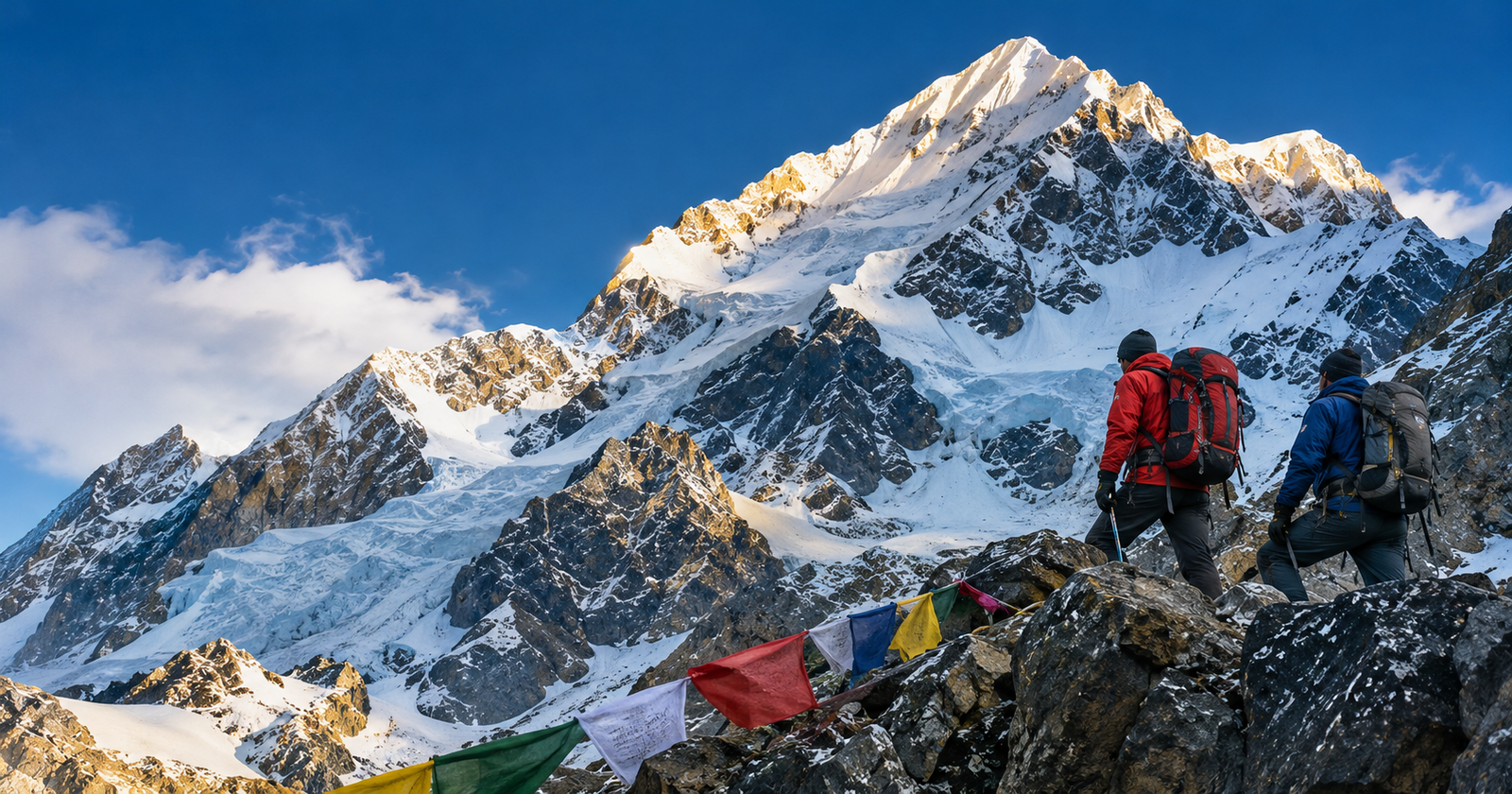
Indian mountaineering has achieved a significant milestone as two Indian climbers, Subhajit Banerjee and Suresh Singh, successfully scaled Tharang II peak in Himachal Pradesh’s Miyar Valley through a new and previously unexplored climbing route. The achievement, recorded on September 22, 2026, marks the first documented Indian ascent of the challenging mountain. Standing at approximately 6,027 metres above sea level, Tharang II, also known as Shailaputri is part of the Tharang Massif in the remote Miyar Valley of Himachal Pradesh. The successful expedition highlights India's growing presence in high-altitude mountaineering and technical mountain exploration.
A Historic Achievement for Indian Mountaineering
The expedition named Team Transcend, was led by expedition leader Rency Thomas. The team included five clients and a five-member technical climbing crew. Subhajit Banerjee and Suresh Singh reached the summit after overcoming difficult weather conditions, challenging terrain and demanding technical climbing sections.
According to available mountaineering records, the first recorded ascent of Tharang II was completed on October 1, 2016, by British climber Charlie French and Swedish mountaineer Anette Kinde. They approached the peak through its southwest face and named it Shailaputri. The 2026 expedition is particularly important because it represents the first recorded Indian ascent and establishes a different climbing line on the mountain's upper sections.
An Unexplored Route and Challenging Climbing Conditions
The climbers approached the mountain through its southwest face, gaining the central spur before continuing towards the upper west face and west ridge. The route presented several technical challenges, including loose rocks, potential rockfalls, steep ice sections and mixed climbing terrain.
One of the most demanding sections involved approximately 90 metres of steep ice climbing at an angle of around 70 degrees. The climbers also negotiated mixed terrain, dry-tooling sections and dangerous snow cornices along the ridge.
Unlike conventional expeditions that rely on fixed ropes and extensive external assistance, Banerjee and Singh completed their successful summit push in a self-reliant style. They carried their technical equipment and made route decisions according to the conditions on the mountain.
A First Attempt That Tested the Team's Determination
The successful summit was not achieved on the first attempt.
During their initial summit push, the climbing team spent nearly 12 hours navigating difficult terrain before deciding to turn back approximately 70 metres below the summit.
With darkness approaching and exhaustion increasing, expedition leader Rency Thomas prioritised the climbers' safety and called off the attempt.
After recovering and reassessing the conditions, the team planned another summit attempt. On September 22, Subhajit Banerjee and Suresh Singh successfully reached the top of Tharang II. Their achievement demonstrates the importance of patience, teamwork, technical preparation and sound decision-making in high-altitude mountaineering.
Why the Miyar Valley Is Important for Mountaineering
Located in Himachal Pradesh's Lahaul region, the Miyar Valley is known for its spectacular mountain landscapes, glaciers, rocky peaks and opportunities for technical climbing. The successful ascent of Tharang II has brought renewed attention to the valley's mountaineering potential. Several surrounding peaks and rock formations still offer opportunities for exploration and climbing.
The expedition also highlights the importance of responsible mountaineering, accurate route documentation and environmental conservation in fragile Himalayan ecosystems.
Conclusion
The first recorded Indian ascent of Tharang II by Subhajit Banerjee and Suresh Singh is an important achievement for Indian mountaineering. Their successful climb through a new route demonstrates the growing technical capabilities of Indian climbers and opens new possibilities for mountain exploration in Himachal Pradesh.
Beyond reaching the summit, the expedition sends an important message about perseverance, teamwork and prioritising safety in some of the world's most challenging mountain environments.
Frequently Asked Questions (FAQs)
1. Where is Tharang II peak located?
Tharang II is located in the remote Miyar Valley of Himachal Pradesh, in the Lahaul region of the Indian Himalayas. The peak is part of the Tharang Massif and is surrounded by high-altitude mountain terrain, glaciers and rugged landscapes. The region is known for its natural beauty and challenging opportunities for mountaineering and adventure activities.
2. What is the height of Tharang II peak?
Tharang II stands at approximately 6,027 metres (19,774 feet) above sea level. Its considerable altitude, steep climbing sections and unpredictable Himalayan weather make it a challenging destination for mountaineers. Climbers attempting the peak require strong physical fitness, technical climbing experience and proper acclimatisation.
3. Who were the first Indian climbers to summit Tharang II?
Subhajit Banerjee and Suresh Singh became the first Indian climbers recorded to successfully reach the summit of Tharang II. Their achievement is an important milestone for Indian mountaineering because they successfully navigated a challenging new climbing route. Their expedition also demonstrated the growing technical expertise and determination of Indian mountaineers in high-altitude environments.
4. When did the Indian climbers scale Tharang II?
The successful summit was achieved on September 22, 2026. Before reaching the top, the expedition team faced difficult climbing conditions and had to abandon an earlier summit attempt because of safety concerns. After reassessing the situation and preparing for another attempt, Subhajit Banerjee and Suresh Singh successfully reached the summit, making the expedition a memorable achievement.
5. Why is the Tharang II expedition historic?
The expedition is historic because it marks the first recorded Indian ascent of Tharang II through a previously unexplored climbing route. Instead of simply repeating the original climbing line, the climbers navigated challenging sections of the upper west face and west ridge. Their achievement has added an important chapter to India's mountaineering history and highlighted the potential for further exploration of lesser-known Himalayan peaks.
6. Who made the first-ever ascent of Tharang II?
The first recorded ascent of Tharang II was completed on October 1, 2016, by British climber Charlie French and Swedish mountaineer Anette Kinde. They approached the mountain through its southwest face and named the peak Shailaputri. Their successful expedition established the mountain's first recorded climbing history, while the 2026 Indian expedition added a new milestone through its alternative route.
7. What challenges did climbers face while scaling Tharang II?
The climbers encountered several technical and environmental challenges, including loose rocks, potential rockfalls, steep ice sections, mixed climbing terrain and dangerous snow cornices. One particularly demanding section involved approximately 90 metres of steep ice climbing at an angle of around 70 degrees. Unpredictable weather, high altitude and physical exhaustion further increased the difficulty of the expedition, requiring careful planning and strong climbing skills.
8. Why is Miyar Valley famous among mountaineers?
Miyar Valley is famous for its spectacular Himalayan landscapes, glaciers, rugged mountain peaks and opportunities for technical climbing. Located in Himachal Pradesh's Lahaul region, the valley attracts mountaineers and adventure enthusiasts interested in exploring relatively remote mountain terrain. Its surrounding peaks offer opportunities for challenging expeditions, while its natural beauty makes it an important destination for Himalayan exploration and adventure tourism.